Wedding guest dress code sets the stage for this enthralling narrative, offering readers a glimpse into a story that is rich in detail and brimming with originality from the outset.
Understanding the nuances of wedding guest dress codes can greatly enhance your experience at any celebration. From deciphering the meaning behind formal or semi-formal invitations to exploring the cultural variations that influence attire, this guide equips you with the knowledge to dress appropriately for every wedding scenario.
Understanding Wedding Guest Dress Codes
Weddings are joyous occasions that often come with specific expectations regarding attire. Understanding the nuances of wedding guest dress codes ensures that you feel comfortable and appropriately dressed for the event. Different weddings may call for various styles, and knowing what each dress code entails can make a significant difference in how you experience the celebration.Wedding invitations often specify a dress code to guide guests in selecting their outfits.
These codes can range from formal to casual, and it’s essential to interpret them correctly to align with the couple’s vision. The following are common dress codes you might encounter, along with their meanings:
Types of Wedding Dress Codes
Understanding the various dress codes can help you select the right outfit for a wedding. Here’s a breakdown of the most commonly used dress codes:
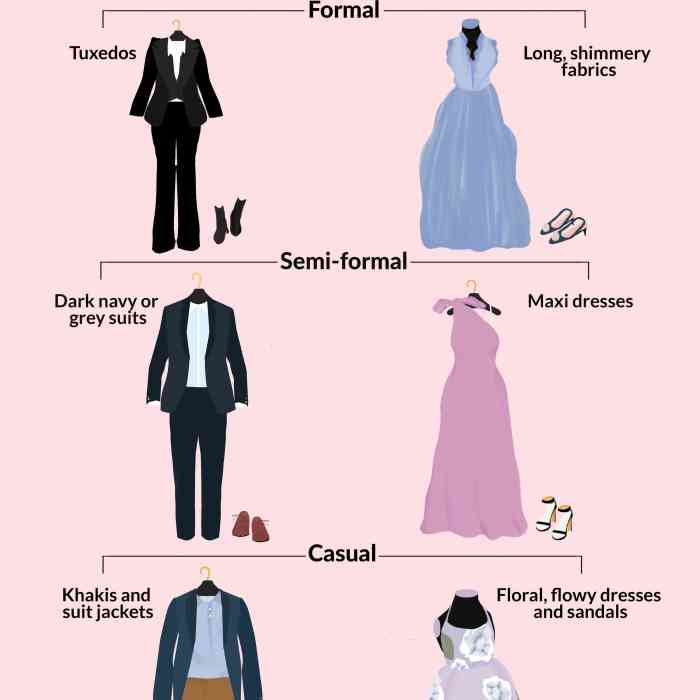
- Formal/Black Tie: This is one of the most elegant dress codes, typically requiring men to wear a tuxedo and women to don evening gowns. Accessories and polished shoes complete the look, creating a sophisticated vibe.
- Semi-Formal: This dress code offers more flexibility. Men can wear dark suits, while women may opt for cocktail dresses or dressy separates. The overall look should remain polished but can be less extravagant than formal wear.
- Casual: Casual attire allows for a more relaxed approach. Men might wear dress shirts and slacks, while women can choose sundresses or stylish separates. Comfort is key, but it’s still important to avoid overly casual items like jeans and flip-flops.
- Beach Formal: Perfect for seaside weddings, this dress code combines elegance with a relaxed feel. Lightweight fabrics and breathable designs are ideal. Men can wear linen suits, while women can select flowy dresses.
When invitations specify a dress code, they often use phrases that can guide your choices. For instance, “black tie” indicates a formal event requiring evening wear, while “cocktail attire” suggests a more relaxed yet fashionable option. Guests should pay attention to any additional details provided, such as venue type or time of day, as these can further refine what is appropriate.
Cultural Variations in Wedding Attire
Cultural influences play a significant role in shaping wedding attire expectations. Different cultures have unique traditions that dictate what guests should wear, reflecting their values and heritage. In many Western weddings, the emphasis is on formal or semi-formal attire. However, in other cultures, such as Indian or Chinese, traditional garments may be preferred.For instance, in Indian weddings, bright colors and elaborate outfits are common, with women wearing sarees or lehengas and men in kurtas or sherwanis.
In contrast, Chinese weddings often feature the color red, symbolizing happiness and good fortune, with guests encouraged to wear traditional qipao or other festive attire. Understanding the cultural context of a wedding can help you choose an outfit that not only meets the dress code but also honors the couple’s heritage. This consideration shows respect for their traditions and enhances the overall experience of the celebration.
Adapting your attire to respect cultural norms while adhering to the dress code fosters a positive atmosphere at weddings.
Dressing for Specific Wedding Themes
Attending a wedding is always a joyous occasion, but dressing appropriately for the theme can elevate your look and ensure you blend seamlessly with the celebration. Understanding the specific requirements of each wedding theme can help you make the right choices when selecting outfits, accessories, and color palettes that are not only stylish but also respectful of the couple’s vision.
Beach Weddings
Beach weddings often call for casual yet chic attire. Lightweight fabrics are ideal to keep you comfortable in warm weather, and you should opt for colors that echo the seaside ambiance. Think of soft pastels or vibrant tropical hues. When accessorizing, consider items that complement the beach setting.
- Outfits: Flowy maxi dresses for women or linen trousers and short-sleeve shirts for men.
- Accessories: Sun hats, statement sunglasses, and sandals or flip-flops.
- Color Palette: Aqua, coral, sand, and light beige.
“Choose breathable fabrics and light colors to mirror the relaxed vibe of a beach wedding.”
Garden Weddings
Garden weddings are characterized by their enchanting and romantic atmosphere. The perfect outfit should reflect this charm while ensuring comfort among nature. Floral prints and soft, earthy tones tend to work beautifully in this setting.
- Outfits: Tea-length dresses or tailored shorts with a dressy top for women; chinos paired with a crisp shirt for men.
- Accessories: Floral crowns, delicate jewelry, and wedges or heeled sandals.
- Color Palette: Lavender, blush pink, sage green, and soft yellow.
“Embrace nature’s beauty with floral patterns and soft hues for a garden wedding.”
Winter Weddings
Winter weddings offer a wonderful opportunity to showcase your style through layers and rich colors. The ambiance typically calls for more formal attire, where warmth and elegance go hand in hand.
- Outfits: Long-sleeve dresses or elegant evening gowns for women; suits or tailored coats for men.
- Accessories: Statement coats, elegant scarves, and closed-toe shoes or boots.
- Color Palette: Deep reds, emerald greens, navy blue, and metallics like silver and gold.
“Layering stylishly is key to staying warm while still looking chic at a winter wedding.”
Fashion Tips for Wedding Guests
Attending a wedding as a guest is an opportunity to showcase your personal style while adhering to the occasion’s dress code. Selecting the right attire involves thoughtful consideration of fabric, fit, comfort, and accessories. Here’s a guide to help you navigate the nuances of wedding guest fashion.
Choosing the Right Fabric and Fit for Wedding Attire
Selecting the appropriate fabric can significantly influence your comfort and overall appearance. Lightweight materials like chiffon, silk, and cotton blends are ideal for warm-weather weddings, offering breathability and elegance. For colder seasons, consider heavier fabrics such as brocade, velvet, or wool blends to keep you warm while maintaining a stylish look. Fit is equally crucial; it should complement your body shape and provide ease of movement.
Aim for classic silhouettes like A-line dresses, tailored suits, or wrap dresses that flatter diverse body types. Also, consider your personal style and how you want to express it through your outfit. A well-fitting outfit not only enhances your appearance but also boosts your confidence.
Importance of Comfort Alongside Style in Guest Dresses
While style is essential, comfort should never be compromised. Weddings can be long events filled with dancing, dining, and socializing. A comfortable outfit allows you to enjoy the festivities without constantly adjusting or feeling restricted. Consider the following aspects to ensure comfort in your attire:
- Breathable Fabrics: Choose materials that allow air circulation to avoid overheating.
- Flexible Fits: Opt for designs that permit movement, such as stretchy waistbands or flowing skirts.
- Length Considerations: Midi or maxi dresses provide elegance without sacrificing comfort, especially for outdoor settings.
- Layering: In cooler months, layering can add both style and warmth, allowing for adjustments based on temperature changes.
Role of Shoes and Handbags in Completing the Wedding Guest Look
The right shoes and handbag can elevate your overall wedding guest look. Footwear should blend style with practicality, especially if the event involves dancing or walking on uneven ground, such as in gardens. Consider the following shoe types depending on the venue and your outfit:
- Flats: Elegant ballet flats or embellished sandals can provide comfort without sacrificing style.
- Heels: Choose block heels or wedges for added stability, making them ideal for outdoor weddings.
- Boots: In fall or winter, stylish ankle or knee-high boots can add a trendy touch, especially with dresses.
A handbag should be both functional and fashionable. Choose one that complements your outfit while providing enough space for essentials. Clutch bags or small crossbody bags are popular options for weddings, as they add a touch of elegance without being cumbersome.
“Comfort and style go hand-in-hand; a well-chosen outfit ensures you enjoy the celebration to its fullest.”
Real Estate Insights Related to Wedding Venues
Choosing the right venue is one of the most crucial decisions when planning a wedding. The venue not only sets the tone for the celebration but also impacts various logistical aspects, including accessibility for guests and overall budget. In this section, we’ll delve into the key factors to consider when selecting a wedding venue, its financial implications, and explore popular venue types in different regions.
Factors to Consider When Choosing a Venue
Selecting a wedding venue involves several important considerations that can affect the overall experience of the day. Key factors to keep in mind include:
- Location: The venue’s location should be convenient for the majority of your guests. Consider proximity to accommodations, airports, and local attractions.
- Accessibility: Ensure the venue is accessible for all guests, including those with mobility challenges. This includes parking facilities and public transport options.
- Capacity: Choose a venue that can comfortably accommodate your guest list. Overcrowding can detract from the experience, while an oversized venue may feel empty.
- Aesthetic Appeal: The venue’s design and ambiance should align with the overall theme of the wedding. Look for venues that offer both indoor and outdoor options that match your vision.
- Services Provided: Some venues offer in-house catering, decor, and planning services. Understanding what is included can save time and reduce stress.
Impact of Venue on the Overall Wedding Budget
The choice of venue significantly influences the wedding budget. The venue sets the stage for the entire event and can represent a significant portion of the overall expenses. Here are some budgetary considerations:
- Rental Fees: Popular venues can command high rental fees, especially during peak wedding seasons. Booking well in advance may offer better rates.
- Food and Beverage Costs: Many venues have exclusive catering partners, which may limit options. The type of service—buffet, plated, or family-style—can also affect costs.
- Additional Services: Venues that provide extras like decor, furniture, or sound systems can save costs but might also limit customization.
- Hidden Fees: Be aware of potential extra charges, including service fees, cleaning fees, or insurance requirements. Always read the fine print.
Popular Types of Wedding Venues in Different Regions
The choice of venue can vary greatly depending on the region and the couple’s desired style. Here are some popular types of wedding venues across various areas:
- Barns: Rustic barns have become increasingly popular, especially in rural areas. They offer a charming, laid-back atmosphere for both ceremonies and receptions.
- Hotels: Hotels often provide all-inclusive packages that simplify planning. They are especially popular for destination weddings, offering convenience for guests.
- Country Clubs: Country clubs offer elegant settings with manicured grounds and exceptional service, catering to more formal weddings.
- Beaches: Coastal areas frequently feature beach weddings, providing stunning backdrops, though weather considerations are vital.
- Vineyards: Wine country venues offer picturesque settings and unique experiences, perfect for couples who appreciate fine wine and scenic views.
Real Estate Considerations for Newlyweds
Embarking on a new life together as a married couple often comes with the exciting milestone of purchasing your first home. This journey is not just about finding the right space; it’s also about making informed decisions together. Understanding the intricacies of the real estate market, the financial implications, and the emotional aspects of buying a home can pave the way for a successful transition into married life.Navigating the real estate market as a couple requires open communication, shared goals, and a clear understanding of the buying process.
Couples should approach this venture with a solid plan that aligns their preferences and financial capabilities. With the right preparation, you can find a home that not only meets your needs but also enhances your shared vision for the future.
Tips on Finding the Perfect Home After Marriage
Finding the ideal home is vital for newlyweds. Start by outlining your priorities, which can include location, size, and amenities. A collaborative approach helps ensure both partners are satisfied with the decision. Consider the following factors when searching for your new home:
- Location: Determine the ideal neighborhood that aligns with your lifestyle and career goals. Proximity to work, schools, and social activities should be considered.
- Budget: Establish a realistic budget based on combined incomes and expenses. Include costs like property taxes, maintenance, and insurance in your calculations.
- Future Needs: Think about your long-term plans, such as starting a family or changing jobs, which can impact the size and layout of your home.
- Must-Haves vs. Nice-to-Haves: Create a list of essential features and secondary amenities that can guide your search without leading to compromises that you both may regret.
Process of Buying Real Estate as a Couple
Understanding the step-by-step process of buying a home together can prevent misunderstandings and ensure a smooth experience. The journey typically includes the following stages:
1. Financial Preparation
Assess your credit scores, savings, and how much each partner can contribute toward the down payment. Consider meeting with a financial advisor for a clearer picture.
2. Mortgage Pre-Approval
Obtain pre-approval from a lender to know how much you can borrow, which strengthens your position when making an offer.
3. Home Search
Utilize real estate platforms, attend open houses, and work with a real estate agent who understands your needs.
4. Making an Offer
Once you find a suitable home, collaborate to determine an appropriate offer based on market analysis and the home’s condition.
5. Closing the Deal
After your offer is accepted, navigate the closing process which includes inspections, appraisals, and finalizing financing.
Common Pitfalls Couples Face When Purchasing Their First Home Together
While buying a home can be a rewarding experience, many couples encounter challenges along the way. Awareness of common pitfalls can help you avoid them:
- Inadequate Communication: Not discussing preferences and financial goals candidly can lead to disagreements later. Regularly check in with each other throughout the process.
- Ignoring Hidden Costs: Beyond the purchase price, account for closing costs, repairs, and renovations that may arise unexpectedly.
- Rushing the Decision: Couples may feel pressure to buy quickly, but taking the time to explore options can lead to better choices.
- Overextending Financially: Stretching your budget can lead to financial strain. Stick to what you can afford to maintain a comfortable lifestyle.
Making informed decisions together can turn the home-buying experience from a daunting task into an exciting adventure.
Investment Opportunities for Couples
Investing in real estate presents an exciting opportunity for newlyweds looking to build a solid financial future together. As couples embark on their journey, combining efforts in real estate can yield significant returns while also providing a comfortable living space. This section explores the advantages of real estate investing, suitable property examples, and the intriguing process of flipping houses for profit.
Benefits of Real Estate Investing for Newlyweds
Investing in real estate allows couples to create wealth while simultaneously establishing a home. Among the benefits are:
- Equity Growth: Homeownership often leads to increased equity over time, serving as a financial asset.
- Tax Advantages: Real estate investments can offer tax benefits, such as mortgage interest deductions and depreciation.
- Cash Flow Opportunities: Rental properties may provide consistent monthly income, enhancing financial stability.
- Diversification: Investing in real estate adds diversity to a couple’s investment portfolio, reducing overall risk.
Examples of Properties That Serve as Both Home and Investment
Newlyweds can find properties that not only fulfill their immediate housing needs but also serve as long-term investments. Consider the following types of properties:
- Duplexes: Living in one unit while renting out the other can create a sustainable income stream.
- Condominiums: Many condos are in desirable locations, making them attractive rental options when the couple decides to move.
- Single-Family Homes: Houses in growing neighborhoods often appreciate significantly, providing both a home and a profitable long-term investment.
Flipping Houses for Profit
Flipping houses is a popular real estate investment strategy that can yield substantial profits when executed correctly. This process involves purchasing a property, making renovations, and selling it at a higher price. Here are the key steps involved:
“Successful house flipping requires research, investment in renovations, and an understanding of the local housing market.”
- Research the Market: Understanding local trends helps identify properties with high potential for appreciation.
- Assess Property Condition: Determine renovation needs and associated costs to ensure profitability.
- Secure Financing: Explore options like conventional loans, hard money loans, or using personal savings for the purchase and renovation.
- Execute Renovations Wisely: Focus on improvements that yield the highest return on investment, such as kitchen and bathroom upgrades.
- List at the Right Time: Timing the market can significantly impact the selling price, so it’s essential to strategize based on local demand.
Closing Summary
In conclusion, navigating the wedding guest dress code doesn’t have to be daunting. With the right insights and a bit of creativity, you can ensure that your outfit not only meets the expectations of the event but also reflects your personal style while celebrating the joyous occasion.
Frequently Asked Questions
What should I wear to a casual wedding?
For a casual wedding, opt for sundresses, smart trousers with a nice blouse, or a casual suit. Avoid overly formal attire.
Can I wear white as a wedding guest?
Traditionally, white is reserved for the bride, so it’s best to avoid this color unless the couple specifies otherwise.
Are there specific colors to avoid as a wedding guest?
Avoid colors that may clash with the wedding theme or that are traditionally associated with mourning, like black, unless it’s a black-tie event.
How important are accessories for wedding guest attire?
Accessories can transform an outfit, so choose them wisely to complement your attire while keeping the overall look balanced.
Is it acceptable to wear jeans to a wedding?
Jeans are generally too casual for most weddings; however, for informal outdoor or casual ceremonies, they may be acceptable if styled correctly.


